
journal | miscellany | press | podcast | team
An Interview with Jonathan Taylor
‘There’s a performative element in all creative writing….’
Aiswari A.V. & Gayathri Mohan
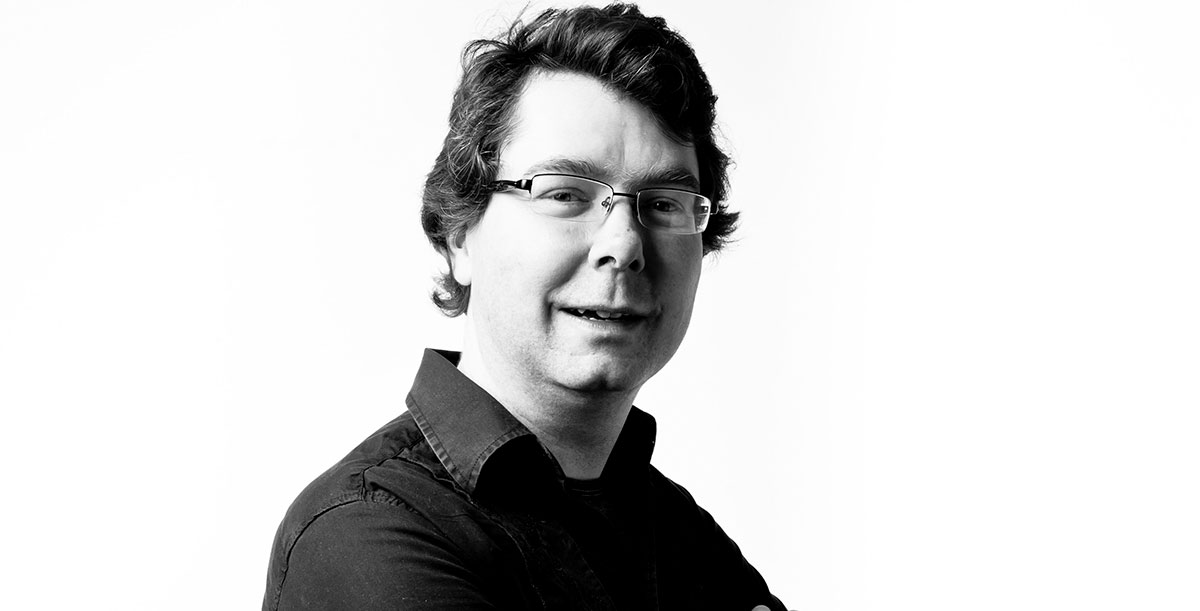
Jonathan Taylor is a novelist, memoirist, short-story writer, poet, critic and lecturer. He is currently an Associate Professor of Creative Writing at the University of Leicester, where he also directs the MA in Creative Writing programme. His notable works include the novels Entertaining Strangers and Melissa, and the memoir Take Me Home: Parkinson’s, My Father, Myself. His poetry collections Cassandra Complex and Musicolepsy have also received critical acclaim. Taylor is the editor of the short story collections Overheard: Stories to Read Aloud and High Spirits: A Round of Drinking Stories. In addition to his creative work, Taylor has published several academic monographs, including Mastery and Slavery in Victorian Writing, Science and Omniscience in Nineteenth-Century Literature, and Laughter, Literature, Violence, 1840–1930. Taylor’s works have been featured in numerous publications and have been broadcast on national and local radio stations across the UK and US.
In Scablands and Other Stories, you portray an almost dystopian, post-industrial landscape marked by suffering and trauma, survival in spite of austerity and isolation of individual. How do you juxtapose suffering and beauty, trauma and resilience in the desolate world? What role do music, art and memory play in the characters’ attempt to transcend or cope with experienced reality?
Scablands includes stories written over a long period of time. The oldest story in the collection dates back twenty years. So at first I wasn’t consciously writing about the effects of austerity and illness. Like many themes, these were things that gradually coalesced, as I realised that most of the stories I had written, or was writing, shared certain territory. Some of this territory is literal (Midlands towns and cities, such as Stoke, where I grew up, Leicester and Loughborough, where I’m based now), some of it is socio-economic (the effects of poverty, Tory austerity, the decline of traditional industries), and some of it psychological / neurological. But even if the stories often deal with difficult, even traumatic, subjects, that shouldn’t mean that joy, love, pleasure are entirely eclipsed. As the great Stoke author Arnold Bennett understood, beauty can be found everywhere, anywhere, if you look carefully enough, and it is potentially elitist to think otherwise. Music is part of this: it exists everywhere, in all cultures and societies. It even existed in the Nazi concentration camps. That’s not to idealise it – it can be used, like all things, for oppression as well as liberation. But it is to say that these things that make us human – music, art, storytelling – are omnipresent, despite the British ruling class’s attempts to claim and sequester them for themselves. I wrote a poem years ago (which is in my first collection Musicolepsy) partly about all this:
Record shop, Lime Street, Liverpool
i.m. Auntie Mildred
Their accents were a different r.p.m. to my Potteries
so it took me a while to understand that their row
wasn’t an operatic prelude to a fight but was about
whose Mahler Five was best, Bernstein’s or Barbirolli’s,
one maintaining the latter was too flaccid, Mancunian,
another accusing the flamboyant New Yorker
of trans-Atlantic showmanship. It really mattered
and unbathed mates on pensions and benefits joined in.
I picked my way through the rubble of orchestral L.P.s,
thinking of my aunties in ’30s terraced slums
hungrily reading Shakespeare and Dickens,
thankful the shop wasn’t a front for gangsters, thieves.
When I found my way back, many years later,
the shop had been crushed under the station eaves.
As if out of a general sense of disbelief
snobbish bulldozers had cleared this street of Mahler.
Kontakte and Other Stories explores the profound and multifaceted relationship between music and experience of life. How do you illustrate the complex interplay between music’s emotional impact, and its inherent capacity to heal or harm? How do the characters’ interactions with music reveal insights into their relationships with love, loss, and self-realization?
Music, I think, has a visceral – near-unconscious – power that other arts aspire towards (to paraphrase Walter Pater). This means its psychological and even neurological effects can be overwhelming. Such power can be used – like all power – for good or ill, or a mixture of both. Stalin, for instance, famously tried to harness music’s power to work for his totalitarian state, in the form of “Socialist Realism”: but, as he and various composers found (to their cost), music is slippery, dangerous, hard to control. This is what my story “Must Sound Genuine” (in Kontakte and Other Stories) is all about. Music is so much harder to pin down to particular meanings, agendas, dominant narratives, than other forms. Music’s language is even more ambivalent than verbal language (which is ambivalent enough), and what people like Shostakovich realised is that music is very good at saying two (or more) different things at once: towing the party line, while also undermining it. At best, literature can do this too: it can at least mimic music’s thematic and emotional polyphony. After all, life itself is emotionally polyphonic, such that people laugh at funerals, cry at parties – and sometimes both at once. Music, literature and other arts are complex ways of capturing that emotional ambivalence and complexity of life. They reflect in a displaced way our neurology, which is inherently fugal – i.e. lots of different things going on at once, whether consciously or not.
High Spirits: A Round of Drinking Stories, with its wide range of themes from death and infidelity to emotional toll on children, confronts the sinister and disastrous consequences of alcohol, demonstrating how it affects individuals’ lives, relationships, and health. How do you and Karen Stevens transform the theme of drinking from a social evil to a cause of personal and societal dysfunctions? In what ways do the stories illustrate the tension between alcohol’s seductive allure and its destructive aftermath?
That question makes High Spirits sound entirely negative about alcohol, which is funny because it actually grew out of Karen’s and my own long-standing drinking habits. Both Karen and I often share a bottle of wine when we meet – and when we were discussing possible themes for an anthology one day, the bottle was there, standing between us, as a kind of augur. Speaking for myself, I have always enjoyed alcohol, ever since I was a teenager. No doubt like a lot of British people, I have an unhealthy relationship with alcohol, although I drink infinitely less now than I used to. The book – like many traditional drinking songs – is intended as both a celebration AND a critique of alcohol. So there are plenty of stories in the anthology about the terrible effects of alcohol on health, families and relationships. But there are also stories – like Des Barry’s brilliant contribution – which are both joyful anarchic celebrations of inebriation, while also capturing the grotesque horrors of it. As I said earlier, this is what literature can do: it can do two, apparently opposite, things at the same time.
Overheard: Stories to Read Aloud revitalizes the performative and logocentric aspect of storytelling, blending genres and styles to explore the dynamic between written and spoken word. How do the diverse, multiple voices and varied narrative techniques reflect the shifting landscape of storytelling, particularly in the context of performing literature? What role does the act of “reading aloud” or “performing” these stories play in reshaping our understanding of the written word, and how do the stories blur the traditional boundaries between literature and performance?
The brilliant poet David Morley says that “all writing is performance” and I totally agree. There’s a performative element in all creative writing at some level. You might say, for example, that the nineteenth-century novel (particularly the Dickensian variety) is just an internalised version of Shakespearean drama, whereby the reader “stages” (or performs) the drama in their own imagination – a theatre of the head, as it were. Dickens, of course, was also a great performer of his own work, and his novels are full of people telling each other stories (out loud) – as one character puts it, “doing the police in different voices.” For me, short fiction has a not-dissimilar heritage: it’s a modern, internalised version of the ancient art of oral storytelling. And increasingly not just internalised, in that there are so many events now where short story writers can perform their work to a live audience.
Of course, there are some stories that are more obviously performative than others, and that would work better in different contexts. But I think there’s something underlying all short stories that is inherently performative: the length. That’s not a minor thing, not just a meaningless label. Poe (who, of course, is one of the founders of the form – in fact, Poe is one of the founding fathers of many forms, genres and traditions) said that a short story was a piece of writing that could be read in one sitting. That’s what the short story has in common with most oral storytelling: both can be read and/or listened to in one sitting, from beginning to end. That structural similarity, whereby they can be consumed “whole” by an audience, is of fundamental importance, and means that the short story, just like the oral folktale, is inherently performable.
A Physical Education: On Bullying, Discipline and Other Lessons, which blends memoir, literary criticism, and social theory, explores the complex dynamics of bullying and discipline in educational systems. How does your personal experience enrich the broader philosophical and sociological discussions on power and disciplinary control? When the apparatus of discipline undergo transition from the physical to the psychological, how do the conventional understandings of power and authority in educational institutions psychologically impact both the victims and the perpetrators?
I set out to explore my own experiences in educational settings (school and university), and wrote a lot of memoir material to start off with. Then gradually I realised that memoir material was opening itself up to wider contextualisation. There were patterns emerging from my own experiences which connected with wider philosophical, sociological and literary analyses of power and bullying. I realised I was writing not simply memoir, but some kind of hybrid, whereby my experiences acted as exemplars for wider social contexts. This in turn brought home to me that bullying ALWAYS works in wider contexts. We tend to visualise – wrongly – bullying as an individualistic activity, whereby one big child (for instance) picks on a smaller one. This is an illusion, if not delusion: bullying always involves more than two people (even when they’re off-stage). There are always others implicated in bullying and victimhood, whether as sidekicks, bystanders, witnesses, disciplinarians, and so on.
Then there’s the broader picture, too: bullying works within an ecology which enables, sometimes even encourages, it – a school, a university, an institution, a family, an education system, a social class, an economy, an education system. Bullying is a symptom which grows out of a whole network of interconnected forces. That’s not to exonerate the individual bully wholly from blame, but it is to argue that it’s more important to try and understand how their behaviour encodes wider systemic problems. If you don’t try and understand the wider ecology in which bullying operates, individual occurrences will keep on happening. I’ve seen it myself in various institutions: occasionally, they do decide to deal with individual bullies in prominent positions. But the underlying behaviour still persists in some way even in their absence, because they were only a symptom, while the system was the cause. In A Physical Education, I tried to capture this dynamic and complex relationship between individual experiences of bullying and wider patterns and systems.
Take Me Home: Parkinson’s, My Father, Myself delves into the emotional and psychological complexities of caring for a parent with Parkinson’s disease and dementia. How does your personal journey of caregiving help to explore broader themes of memory, identity, and loss of recognition? How does the narrative reflect the tension between the desire to understand one’s parent and the profound changes brought on by illness, and ultimately challenge the notion of who a person “really” is?
Linda Grant says that “Memory, I have come to understand, is everything, it’s life itself.” Memory is who we are, the essence of our identity. So to lose it – through dementia – is to lose a sense of self. And that erosion affects people around the sufferer too. If someone you love no longer recognises you, or only half recognises you, then your own sense of identity is inevitably affected. Take Me Home is, in part, all about that sense of recognition between family members, and how fragile it can be. I believe (like Dickens!) that our identity is constructed socially – in other words, that identity, rather than being innate, exists between selves, in relation with others. That’s why loneliness can be so devastating – because it affects our sense of identity. It’s also why dementia and misrecognition syndromes (which my father also suffered from) have an impact on those around the sufferer, as well as the sufferer him or herself. So in Take Me Home, I wanted to explore the psychological impact of illness on the sufferer and the carer – and, crucially, on the space between the two. I wanted to write honestly about the strange and often paradoxical relationship between the carer and cared-for, as I understand it in retrospect.
Laughter, Literature, Violence, 1840–1930 examines the paradoxical relationship between laughter and violence, exploring how literary texts from authors like Edgar Allan Poe and Katherine Mansfield challenge and expand traditional theories of laughter, such as Schadenfreude and superiority theory. How does the interplay of laughter’s ambivalence and violence contribute to the understanding of human nature, particularly in the context of war, horror, and death? How does the search for a “perfect” or transcendent laughter in literature reflect the broader philosophical and political tensions of the era?
The book started as a reflection on my own fascination with what you might call “dark comedy.” It’s been a hallmark of my writing since the early days, so I wanted to explore what I do creatively in theoretical and critical terms. Clearly, there is a close relationship between, on the one hand, laughter, and, on the other, violence, horror, the grotesque. It’s a relationship that I became conscious of in my late teens: certain aspects of my father’s illness were both horrific, and yet also darkly funny. I remember laughing when he misrecognised me, and tried to hit me. It was a disorientating experience, but I understand in retrospect that it’s a kind of “reflex action, no different to crying” (as I put it in Take Me Home). So, in Laughter, Literature, Violence, I set out to understand such personal experiences through philosophy and literature. Poe was an obvious first choice of author: not only do I love his work, he’s also famously brilliant at combining horror and comedy in his work. There’s also a chapter on memoir in the book – which reflects in part on my own writing in the genre – and one on World War 1, a historical moment where the absurd and horrific mingled in the most extreme way. The controversial author Wyndham Lewis captures this – or attempts to capture it – in his stories and fantastic memoir, Blasting and Bombardiering.
In Figures of Heresy: Radical Theology in English and American Writing, 1800-2000, you and Andrew Dix explore the persistent presence of religious themes, particularly Christian and Jewish heresies, and their relationship to new ideas, in the works of writers often considered atheistic or secular. Do you think that even writers who appear to reject traditional religious frameworks continue to engage with, and even reframe, religious narratives and tropes? How do you address the tension between heresy and orthodoxy, and the eventual institutionalization or “ossification” of heresy, particularly in terms of literature’s role in both challenging and potentially reinforcing doctrinal boundaries?
Yes, I think, however apparently “secular” authors are, most of us are haunted, in some way or other, by the language and imagery of major religions. They’re a kind of linguistic unconscious we all draw on. To give an example: in Figures of Heresy, I wrote about Edgar Allan Poe, and particularly his late, strange work Eureka. The book (which is labelled a “prose poem”) purports to be Poe’s insight into the mysteries of the universe, mingling cosmological science with mysticism and Romantic pantheism. In a displaced way, it’s also deeply religious, a far-flung offshoot of heretical Christian imagery. On top of all that, it may also be a very complex hoax.
Still, it’s one of the rare books which inspires a religious feeling in myself: I find it utterly convincing as a vision of transcendence, despite (or perhaps because) of the possibility that it’s all one big joke. It tells you something of the nature of my own religious belief, no doubt. I was brought up an Anglican Christian, and we went to church or Sunday School almost every week. So I absorbed all of that and even now – years later, and a very, very long way away from conventional Christianity – the stories and language still haunt me. A few years ago, a writer I greatly respect asked me if I still called myself a Christian. I said no – and then thought for a bit, and added: “No, but it never totally goes away, does it? If Christianity were a solar system, I’d be orbiting somewhere around Pluto – very distant, but still just about within the sun’s gravitational pull.”
Mastery and Slavery in Victorian Writing explores the dynamics of power from the viewpoint of Hegel’s “Master-Slave Dialectic,” focusing on the representations of masters, slaves, and servants in the works of authors like Carlyle, Dickens, and Eliot. How do you explore the concept of the master-slave relationship to analyse broader social, political, and economic structures in Victorian literature? How does the examination of symbolic figures like the American slave-holder, the musician, the demagogue, and the Jew illuminate the intersections of race, class, and power in the Victorian era, and contribute to the contemporary debates on systemic power, oppression and resistance?
I came across Hegel’s short “Master-Slave Dialectic” (in The Phenomenology of Spirit) when I was in my early 20s. It provides a kind of abstract, existential framework of individualistic power, and the way in which power relations can be inverted. It was hugely influential in the nineteenth century, not least on Marx. And it’s also been hugely influential on my thinking and my writing ever since I came across it – both in a positive and negative sense. That is, I’m fascinated in the ways in which it is both paradigmatic and flawed: as a philosophical model, it’s very convincing; in reality, things never work quite in the way Hegel envisages. The disjunctions between empirical “reality” and Hegel’s model are just as fascinating – maybe more so – than the connections. I am, I suppose, quite theoretically minded, but what this means is that I’m interested in exploring both the connections and disconnections between theory and experience. There are plenty of moments in A Physical Education, for example, where the literary examples or memoir sections contradict or complicate the theory.
Your book Science and Omniscience in Nineteenth Century Literature outlines how nineteenth-century writers grappled with Laplace’s ideal of scientific omniscience and the deterministic universe. Do you think that writers like Carlyle or Wordsworth complicated or resisted this model, not just thematically, but formally or narratively? How does their resistance reflect broader anxieties about the role of human agency in an increasingly ‘calculable’ world?
Again, there’s a sense in this book that I’m exploring the complex relationship between theory, on the one hand, and practice or subjective experience, on the other. In this case, I’m researching the relationship between an absolutist Laplacian determinism and its complication in literary works (by Carlyle, Wordsworth, Dickens and others). Literature is the complement of philosophy: it represents the empirical, experiential, subjective, human side of the world, while the latter often represents the general, the quasi-objective, the abstract side. They cannot exist without each other, and of course overlap everywhere (so it’s a false dichotomy, really, albeit a useful starting point). I think almost all nineteenth and twentieth-century novelists, in particular, are writing about the relationship between determinism and freewill – and this is most obvious with the Naturalist novelists of the later nineteenth century. A novel – however wide or narrow its focus – is, in essence, a way of exploring how people function in context (and that context might be geographical, economic, social, psychological or neurological). George Eliot’s Middlemarch is a famous case in point: it’s about how far Dorothea and Lydgate can express their sense of themselves freely, versus how far their provincial context crushes or reshapes that freewill.
Your anthology Cassandra Complex engages with the myth of Cassandra as a point of view to explore prophecy and belief on the one hand, and the poet’s role as a witness and interpreter of mainstream and private histories on the other. How did the myth shape your thinking about voice, authority, and truth in the construction of these poems? How does the musical structure of the book’s four movements complement or complicate these concerns?

I’m a rationalist, consciously speaking: I believe in a scientific view of the universe, even though – as many have come to realise – that scientific view has reached the point where it seems just as absurd as conventional religion. Cosmology, relativity, quantum theory, chaos theory: these things are grotesque, crazy, transcendent in ways which, of course, echo older forms of religion and mysticism. Even modern cosmology (as I say in Science and Omniscience in Nineteenth-Century Literature) can’t escape the imagery of (for instance) Renaissance mysticism. And nor can I: while I might claim to an Enlightenment, rationalistic mindset, I know that this consciousness is haunted by a much deeper unconscious, of superstition, of mysticism and so on. (Hence, no doubt, why I like Poe’s Eureka so much, because it blends all these things into one). So I wrote Cassandra Complex – which deals with subjects like prophecy, myth, astrology, alchemy, telepathy and apocalypse – as a way of exploring my own fractured attitude towards these things. On the one hand, I don’t believe in visionary dreams; on the other, I’m endlessly fascinated by the ways in which they work, and can (for example) be proved true in retrospect (something called “retroactive clairvoyance”).
Medieval and Renaissance mysticism is often a thing of beauty – you only need to think of Kepler’s view of “The Music of Spheres” to understand this. And poetry can deal just as well, if not better, with things that aren’t true. As Archibald MacLeish succinctly puts it, a poem “should be equal to / Not true.” Poetry – and literature in general – can be a way of exploring things that aren’t objectively “true” but which still haunt us, change us, determine our lives. The same goes for fiction: I can never understand why people say that fiction doesn’t matter, because it’s not true. There are many things that change our lives – even determine whether we live or die – that aren’t objectively true: the stock market, theology, global economics, nationalism. These are all fictions which demonstrate how all-powerful fiction can be.
In Musicolepsy, your exploration of music and astronomy creates a kind of double orbit: two vast, abstract systems through which you navigate memory, perception, and emotion. How do you view the interplay of these two disciplines shaping the poetic voice in this anthology? What kind of language or form is most suitable to capture the ineffable qualities of both sound and space?
I write about what I’m interested in, and music and cosmology figure large in that. The image that connects the two most obviously is, of course, the ancient idea of the “Music of the Spheres.” Many writers, philosophers and scientists have been intrigued by this idea over the centuries. So it was important to me in Musicolepsy both to talk about the two subjects (music and cosmology) separately and to have certain poems which stage the overlaps between them. One of the most well-known poems from the collection arose from this intersection. As Stephen King says, writing often emerges from two seemingly incompatible images layering on top of each other. Here, I find a place where the ancient image of the Music of the Spheres finds a new expression in a cutting-edge cosmological discovery:
Black Hole in B-Flat
Astronomers using N.A.S.A.’s Chandra X-ray Observatory have found, for the first time, sound waves from a supermassive black hole ….
– N.A.S.A.-Chandra, 9 September 2003
For 2.5 billion years you’ve groaned,
B-flat 57 octaves below middle-C.
For 2.5 billion years you’ve moaned
for no-one, because no-one
could hear you from Perseus Cluster
250 million light years away,
your galactic ground-bass a million billion
times lower than human hearing,
dog hearing, even Keplerian hearing,
who would have been hard pushed
to retain an equal temperament
in the face of such monotony –
more monkish medieval drone
than planetary polyphony,
as if Palestrina never happened,
and Bach dozed off at the organ
shortly after the Big Bang,
his elbow resting on a pedal point
over which he dreamt his flickering fugues,
short-lived as novas,
short-lived as life,
short-lived as anything but you,
and all-too-soon
sucked back down
into your B-flat abyss.
Entertaining Strangers weaves together dark comedy, historical trauma, and surreal memory to create a narrative that is both intensely psychological and politically suggestive. How did you approach the interplay of personal eccentricity and collective memory in the novel? What is the extent to which the figure of the ‘stranger’—both Jules and the past itself—acts as a disruptive force within Edwin’s carefully ordered world of high culture and ants?
The epigraph to the book and, indeed, its title come from a famous passage in the Bible: “Be not forgetful to entertain strangers: for thereby some have entertained angels unawares” (Hebrews 13:2). Everything that happens in the book arises from that epigraph, both on a microcosmic level and on a macrocosmic one. On a micro-level, there’s the way in which Edwin Prince welcomes the mysterious narrator into the house; on a macro-level, there’s the repudiation of “hospitality” by the British ships in the harbour during the Great Fire of Smyrna. The 1997 story is a tiny mirror of what happens in 1922 – a mirror that inverts the traumatic failure to “welcome strangers” seventy-five years before. It seems to me that there’s little in the world more important than how people behave towards strangers, and the current state of the world – again, both on a macro and micro level – is all down to the human race’s many failures in this regard.
Melissa opens with a moment of simultaneous loss and collective hallucination—a young girl’s death paired with a shared, inexplicable musical experience. How did you conceptualize the relationship between individual grief and communal perception in the novel? Could you comment on the ways through which the musical hallucination functions as a metaphor, or a medium for mourning, memory, or even meaning-making in the face of trauma?
Music is often portrayed as a communitarian experience – a mode of artistic expression that connects people with each other. As George Eliot puts it, “Music stirs all one’s devout emotions [and] blends everything into harmony – makes one feel part of one whole, which one loves all alike, losing the sense of a separate self.” I’ve written a lot about this Romantic idealisation of music (for example, in Mastery and Slavery in Victorian Writing), as well as the potential dark side of it: after all, the Nazis famously used Wagner’s music as a way of binding people together so that they might lose a “sense of a separate self.” Melissa opens with a moment of musical-social-cohesion, with the collective musical hallucination (which was inspired by various “real-life” events).
But then it goes on to chart the disintegration of this moment of apparent togetherness, and the street becomes atomised again – to the point that no-one sees the family at the centre of the trauma gradually falling apart, in the wake of Melissa’s death. There’s another moment, towards the end of the novel, where the street comes together again, and then a point shortly after where a piece by Schubert provides a rare (and temporary) moment of reconciliation between father and daughter. Music can offer these near-transcendent moments – but of course they’re never complete, and the world carries on as it was afterwards. That could be seen as a tragedy, I suppose – but at least music (and other art forms) give people a glimpse, however fleeting, into something beyond themselves. In that way, without being overly Romantic, I do believe that all artists are, at some level, utopianist-anarchist-idealists.
▪ ▪ ▪
Aiswari A.V. is a postgraduate student pursuing an M.A. in English in the Department of Languages at Jain University, Kochi Campus, Kerala, India.
Gayathri Mohan is a postgraduate student pursuing an M.A. in English in the Department of Languages at Jain University, Kochi Campus, Kerala, India.
journal | miscellany | press | podcast | team
 Twelve Winters