
journal | miscellany | press | podcast | team
Linking ‘Family, Trauma and Place’
An Interview with John Paul Jaramillo
Deborah Brothers
John Paul Jaramillo grew up in the “Steel City” Pueblo, Colorado, and his writing sets readers into its working class, Latino neighborhoods. Currently, Jaramillo lives, writes, and teaches in Springfield, Illinois. He is the author of a book of short stories, The House of Order (Anaphora Press), which was a 2013 Latino Book Award finalist. His two novels, both published by Twelve Winters Press, are Little Mocos (2017) and Carlos Montoya (2023). Jaramillo’s three books function as a fictional family trilogy that underscore, in his words, the links between “family, trauma, and place.”
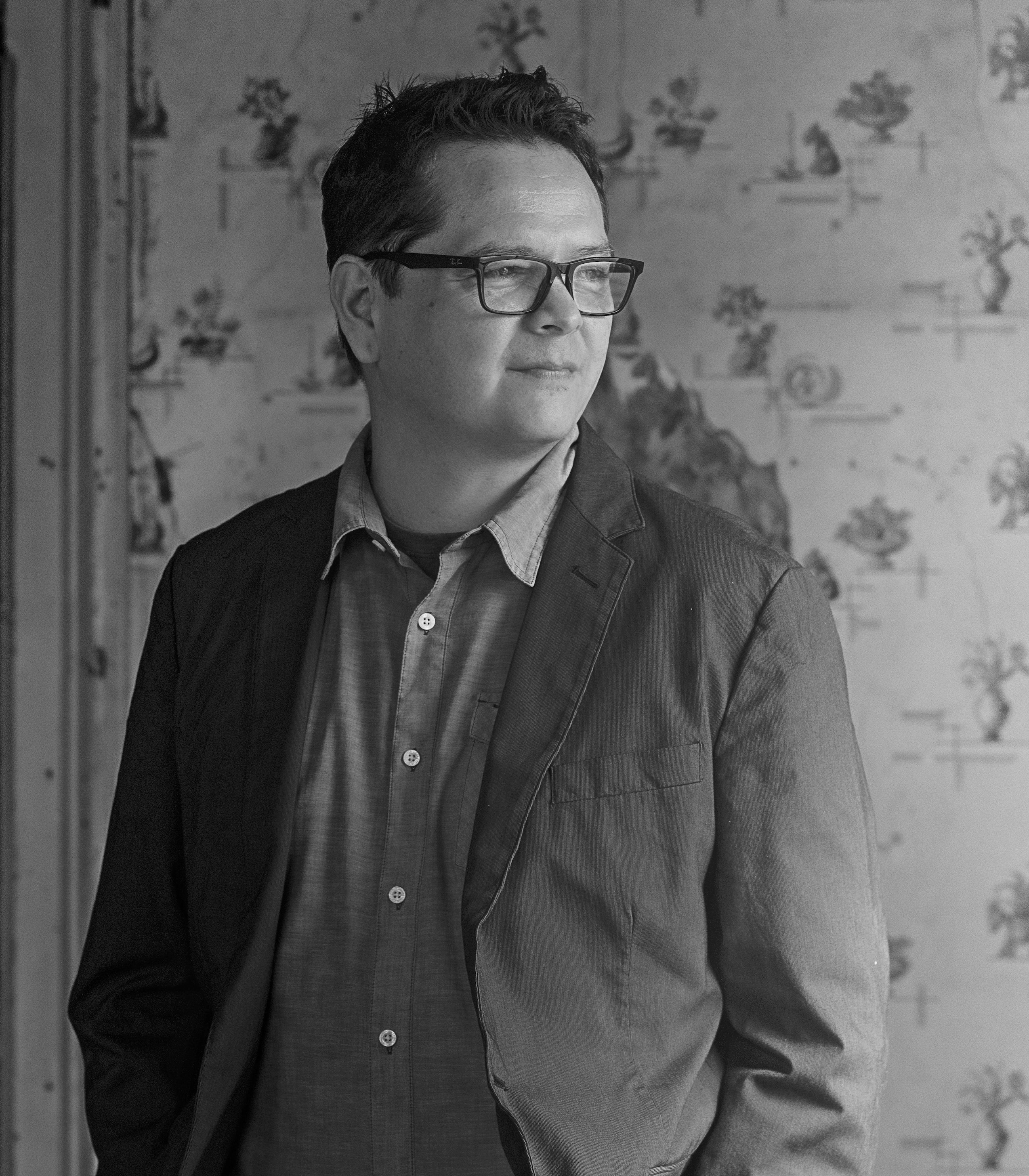
Each of the books includes the character Relles Ortiz, Jr. or “Manito” Ortiz, a fictionalized version of the author. Manito, raised by grandparents and profoundly influenced by his unreliable Uncle Neto (Ernesto Ortiz), is often frustrated by his elders’ secrets and contradictory versions of the truth. While Manito is not a primary character in the new novel, Carlos Montoya, his appearance toward the end of the book offers readers a complete reframing of the chapters that come before, and a satisfying, yet bittersweet, reminder that no story Jaramillo tells will ever feel completely resolved. The following interview is culled from a May 2023 podcast conversation we had as well as additional less formal discussions of his writing.
Carlos Montoya is the second novel but the third book that you’ve written based on your family stories. How does this book fit in with the other two?
House of Order was a collection of short stories about my uncle and Little Mocos is the follow up to that, a novel about my father. Carlos is a book essentially about my maternal grandfather, so my mother’s side of the family. But they’re all a fictional take on a family tree. It’s difficult for me to write memoir, and so my way around it has just been to fictionalize my family. Pretty much everything I write is set in this family world.
How did the writing process for this book change from the other two?
My process is always slow. I had what I called Monte Vista stories or Monte stories for a long time (Monte Vista area of Colorado), and I was writing about Carlos for a long time and I was trying to find how to pull them all together. I felt they had a certain element missing, and I didn’t know exactly what it was. The writing process for this one was interrupted by the pandemic and also, in some ways, COVID lockdown and being home for that long time gave me the opportunity to sort of dig in and explore the idea of writing a minimalist epic.
Talk about what you mean by a “minimalist epic”
Yeah. I knew that I had written a lot of stories about Carlos’ life as an old man, but I wanted to go back and write him younger too. I really love literary minimalism, and I wanted to try to write a minimalist epic of the scope of my grandfather’s entire life, kind of like a Fat City Leonard Gardner book–a minimally told epic novel about an entire town, but it’s told in a very small way. It is contradictory. Writing minimal stories, really spare stories, but then telling this grand story with them. The Carlos stories, especially the Western sections, got grander, bigger, stranger, during the lockdown in the early days of the COVID pandemic.

Carlos Montoya is the central character. Readers see him from about age 12 until his death, right?
Yes. Carlos is the central character, and he is an older man when we meet him, and he’s working at a sawmill, and he has a young wife. That story of their marriage, that’s kind of tortured. That story of their relationship is interspersed with his backstory at various periods, and includes the fact that he was a veteran of World War I, had been married before, and lost his first wife in the flu epidemic at the end of WW1.
So part of the messiness of the marriage between Carlos and the much younger Filipa is because both of them have trauma. Can you speak a little more about that and how that trauma informs the novel?
I see them as characters who are both haunted, in a way. Filipa was taken from her family and diagnosed as mentally ill and sent to a home for girls for some time. Carlos is an alcoholic and a war veteran. They’re both pretty unstable.
Carlos also has some medical issues, right?
Yeah, as an older man, he develops diabetes and I already said he’s an alcoholic.
But he has tinnitus too and doesn’t he also see things that aren’t there?
He has ringing in his ears and some hearing loss from damage from loud machines he’s used on the job, yes. He definitely talks to creatures that others probably couldn’t see and it’s pretty unclear and ambiguous about what those beings are or if they are just in his head. When he’s younger and meets up with the cowboys, he has a visitation from spirits too.
And what is Fillipa haunted by, then, besides what she perceives as a stigmatized mental health disorder diagnosis?
She’s in this situation that she thought would save her and give her some status and it doesn’t. She essentially has very little interaction with anyone other than Carlos and she’s not happy with that.
So lack of choice, then?
You could say that, yes. She has not had many opportunities for making her life different. So this came together because I’m obsessed with the area that I grew up in, specifically the San Luis valley of Colorado and also northern New Mexico. Colmor, New Mexico is an infamous ghost town in the center of it. It used to be a boom town until the rail lines got diverted and the post office went away. And then it just went dead. Now it’s surrounded by a chain link fence and there are signs that say if you visit the town make sure you close the fence behind you.
It’s sort of the symbolic representation of no choices or dead choices or being haunted by the other people they might have been?
I think so, yes.
And where and how does the six-armed cross fit in then, as a representation and literally? I mean, it’s on the cover of the book even!
Yeah. Artist Thom Whalen designed that, over the state flag of New Mexico. And then this area of Colorado is known for its six-armed crosses on some of the churches. I love this metaphor that Carlos is like this complicated six-armed cross and all his family members spiral out from him, like these arms. Carlos is the center of all this kind of family craziness or family hell and he sometimes takes care of the family and sometimes he doesn’t.
Is there more to these crosses than just the fact that they have six arms?
I read a non-fiction book by Virginia Simmons called The San Luis Valley: Land of the Six-Armed Cross, and I’ve seen the six arm crosses, but it was kind of a let down.
Really? Why?
Because Frank Waters, a writer I really admire, writes about crosses, including the six-armed cross. He’s a mystic, right, and so he has all these mystical ways of looking at them. But when you go see them and ask people about what makes them special, they just say, “Oh, it’s the weathervane!” They’re farmers, you know, and to them it’s just a cross. But Frank Waters sees the cross as representing the complexity of consciousness. Like reality is in four dimensions, not three, and that makes me think of fiction because you move around in time. I used to have an old professor that would say 3D is limiting, 4D is best. SO 4D would be more like the reality that we’re in now and then also it implies that there’s a fifth or there’s a 6th and if you think of a novel being every chapter switching –moving in time and moving around to different realities– than the six arm cross kind of represents a compass. Carlos, at least for this book, is kind of like the center of that entire convoluted mess of family. But also the amazing aspects of family. So the sacredness and the profane aspects of family, kind of like the cross being this amazing cross and also this weathervane.
Maybe I’m just interpreting here, but the book does speak a lot to the complications of family and maybe particularly parenthood, especially fatherhood?
The book is about a father figure who is incredibly important to the story of everyone’s lives, but then also strangely not important because he’s not always present. He also has problems–he drinks a lot, and he’s trying to deal with his own life and his own ghosts. I want to say that there is kind of a motif of families are the best thing and then families are the worst thing; that father figures are amazing and father figures are hurtful. I think that just comes from my own mixed feelings about families, the love but also the frustrations and the limitations.
So what else are you working on now that Carlos is wrapped up?
Something else I started during the pandemic, a novel. It really is a young adult manuscript, and Thom Whalen and I might collaborate on this to make it a graphic novel. That’s a sort of Rubik’s Cube thing I would like to crack, you know, graphic novels. It’s filled with weird stuff like Martians and conspiracy theories. I also have almost another book of short stories I’ve been working on that right now I’m just calling “The Neighbor Lady Stories.” I have other characters from my family that I want to explore later, so a lot to keep working on for now.
▪ ▪ ▪
Deborah Brothers holds a Ph.D. in English Studies and currently works as a professor of writing and literature. She has published fiction, non-fiction, and scholarly work in a variety of newspapers, magazines, and journals including The Lion and the Unicorn, English Journal, Choice, and Artciencia. She previously interviewed Kathleen Balma for Twelve Winters.
journal | miscellany | press | podcast | team
 Twelve Winters