
journal | miscellany | press | podcast | team
The Gauntlet Known as
the ‘Writing Workshop’
Ted Morrissey
The following is excerpted from my forthcoming book, tentatively titled Aspects of Expressive Writing: The International Lectures, and specifically from the new commentary I am writing for each of the eight lectures. This excerpt is from Lecture 3, “Beauty Must Come First: The Short Story as Art Made of Language,” delivered as a panel presentation in Singapore, 2023, at the Sixteenth International Conference on the Short Story in English.
▪ ▪ ▪
I want to return for a moment to writing education and particularly creative writing education. In the second [William H.] Gass meme that I included in the lecture I quote him regarding his view of teaching writing: “[L]earn not to take advice.” I expound on it briefly as it pertains to the staple of creative writing programs: the workshop and its featured critiques by one’s peers. I’m dubious regarding the value of the workshop approach, the workshop experience. A student writer offers up their work, and their fellow students enthusiastically perform an autopsy on the body of the short story or novel chapter or poem, or what have you. I think there is a basic assumption that these critiques offer valid assessments of the piece in question. But I don’t think they do by and large. When I first started having my stories workshopped, in the early 1990s, I certainly took my fellow students’ criticism to heart. Tom didn’t like x, Dick didn’t care for y, and Harriet downright hated z. So in the next draft I felt duty-bound to address the issues regarding x, y and z—which resulted in some pretty awful stories, stories far worse and weaker than their original iterations.
Eventually, with the advice of Kent Haruf [my mentor and thesis adviser], I learned to pretty much ignore what my peers had to say about my submitted pieces. He said that when students submit a story to workshop, they probably have a place or two in it that they’re not sure about. So, during each peer’s autopsy report, just listen for anything that may be said about those one or two suspect spots, basically to confirm one’s own suspicions and perhaps to get an idea or two about how to deal with the shoddy spots. This attitude and approach resulted in much better workshop experiences for me—more fruitful and no longer psychologically devastating. I was acutely depressed after my inaugural workshopping autopsy; I thought maybe I’d been deluding myself all these years in my belief that I was a pretty good writer, and all the teachers who’d contributed to my good opinion were themselves deluded. But no. It’s just that the workshop model was designed to find faults, and my fellow students were dedicated to identifying some, come hell or high water.
I suppose I learned some useful narrative techniques in my writing workshop classes, some useful do’s and don’ts. I have a lot of students who feel that workshopping has been invaluable to their development as writers. In addition to learning some helpful techniques, students may take away other meaningful skills, as sort of side benefits. For people who haven’t already established a writing habit in their lives, workshop courses provide the motivation to produce and complete creative work—behavior that will ideally become habitual and carry on beyond the completion of their degree. Also, the rough-and-tumble nature of workshopping, the frequent cruelty and barbarity of critique sessions, can prepare writers-in-training for the ceaseless failures and rejections inherent in the writing life. Writers, it is said, must develop “rhino hide” to withstand the steady barrage of criticism and keep producing work. For many writers, the thickening of their skin begins in writing workshops.
The primary lessons I learned from my workshop experiences as a student were that readers are highly subjective and highly idiosyncratic, and no text can be universally loved. In fact, efforts to make a text widely appreciated result in lukewarm mediocrity. The best work is embraced by only a few readers. Only those with refined reading tastes can recognize true mastery. And to achieve mastery, a writer (an artist) must do what Gass advised: Follow your own instincts, develop your own style, and establish your own criteria of success.
These lessons have influenced and inspired my pedagogy too. Rather than focusing on the negative in responding to student work, I prefer to underscore what is working well. I will point out one or two obvious issues, if they are obvious, but I mainly talk about what I like in the text and why I like it. For the last couple of years in the MFA program I have mainly been teaching the thesis course; and each time there is a student or two who want more negative criticism. They have been so convinced (brainwashed?) by their workshop experiences that every piece of writing is inherently flawed, they feel something isn’t quite right if their instructor doesn’t pounce on this or that weakness. There must be some problems with the text.
But what constitutes a problem? I have students who are writing fantasy, romance, science fiction, religious poetry, middle school stories, family histories, trauma memoirs, travel narratives. Generally speaking, these are kinds of writing I have no interest in as a reader and no experience with as a writer. I feel I can judge solid writing when I see it. I can underline things I like because they’re working effectively in the text. Are there elements that aren’t working for me? Absolutely, but that’s because as a human being I don’t respond to whatever it is they’re writing about. A few months ago I had a student who was desperate for negative criticism, and she asked me pointblank “Do you find my novel boring?” To which I answered honestly, well, yeah—but that’s not because of your writing. You’re writing a romance novel set on a horse farm in Montana. It’s not the sort of thing I like to read, but I know that it’s mechanically sound and that there are readers who would respond positively to the story you’re telling.
I also point out that how we respond to text has a lot to do with the situational context. If I’m reading an attractively published book while sitting in my favorite chair, cup of excellent coffee within reach, quite at my leisure, then I’m much more inclined to enjoy what I’m finding on the page. Versus, as an online instructor, I have a hundred pages of text to read and respond to on a screen, sitting at my desk, with the clock tickingly waiting for my sage advice, tapped out via keyboard strokes and/or digital marking tools. The latter is a really atrocious situational context, and one’s emotional response to a text shouldn’t be wholly trusted. I can recognize the elements of a well-written scene or poem, but it’s quite another thing to say I have enjoyed the reading experience.
I compare my pedagogical approach to lawncare. If one nourishes a lawn consistently, the grass will grow lushly, over time choking out any weeds that may want to grow there. One doesn’t need to spray harsh weed-killers or violently uproot them. Making sure the grass grows robustly is the best defense against a weedy yard. When it comes to responding to student writing, I prefer to underscore and nourish what the writer is doing well and spend little to no time criticizing this point or that. Again, obvious errors, in form or grammar or mechanics (like how to punctuate and represent dialogue) I’ll make mention of—but even then not every single example, just one or two examples to illustrate the type of issue. If I concentrate on nourishing the effective aspects of the student’s writing, over time all that will remain of their techniques are the lush, weed-free ones.
▪ ▪ ▪
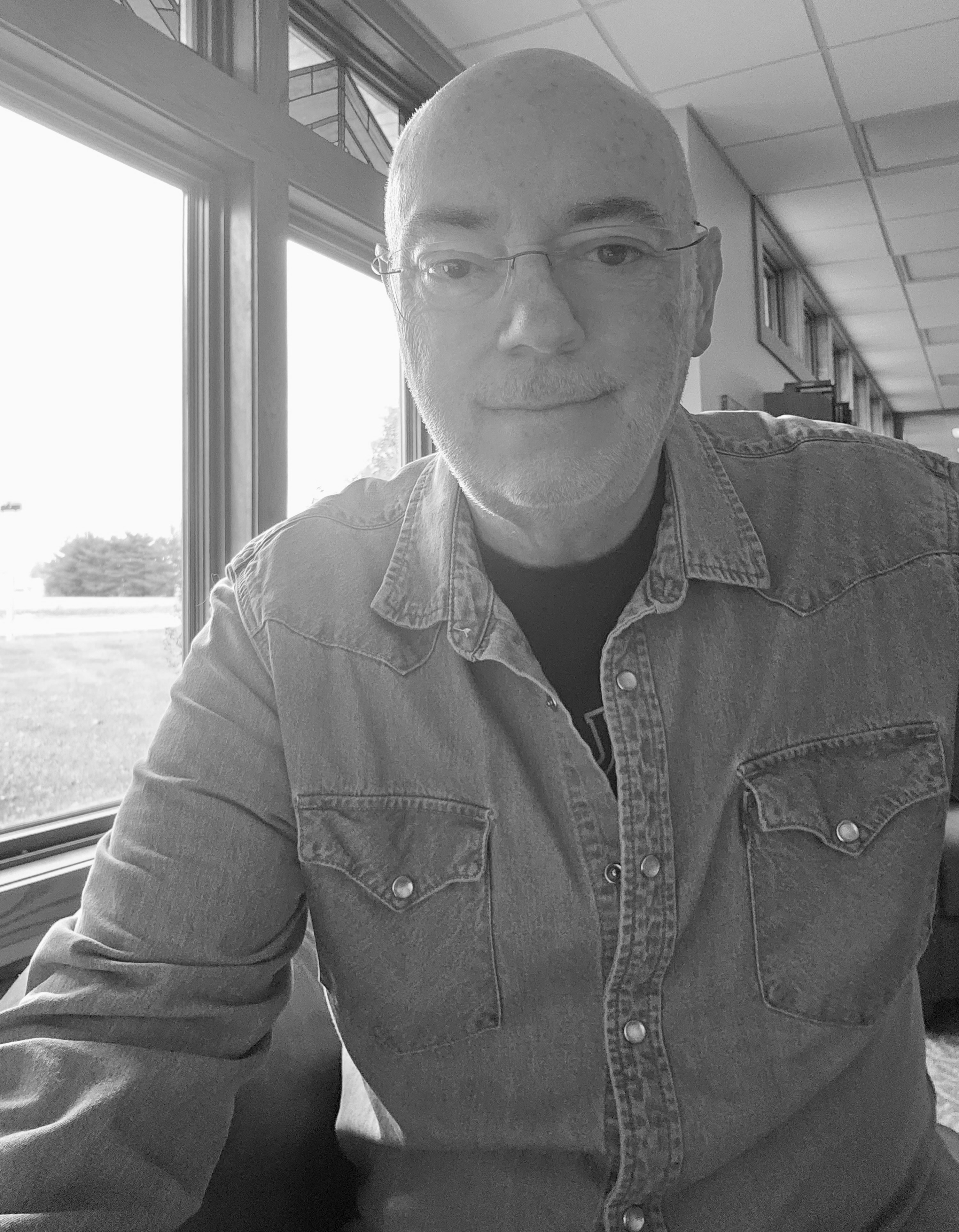
Ted Morrissey is the publisher of Twelve Winters Press and its various entities, including Twelve Winters Journal, Twelve Winters Miscellany, and the podcast A Lesson before Writing, which he co-hosts with Brady Harrison and Grant Tracey. His most recent book is Aspiring Child: A Biography of Mary W. Shelley in Sonnets. He is on Instagram, Bluesky, TikTok, YouTube, and elsewhere.
journal | team | miscellany | podcast | home

